Scientific name:
Passiflora foetida
Google Search
Wikipedia
German name:
Stinkende Grenadille
Filipino name:
Marya Marya
Family:
Passifloraceae
Description:
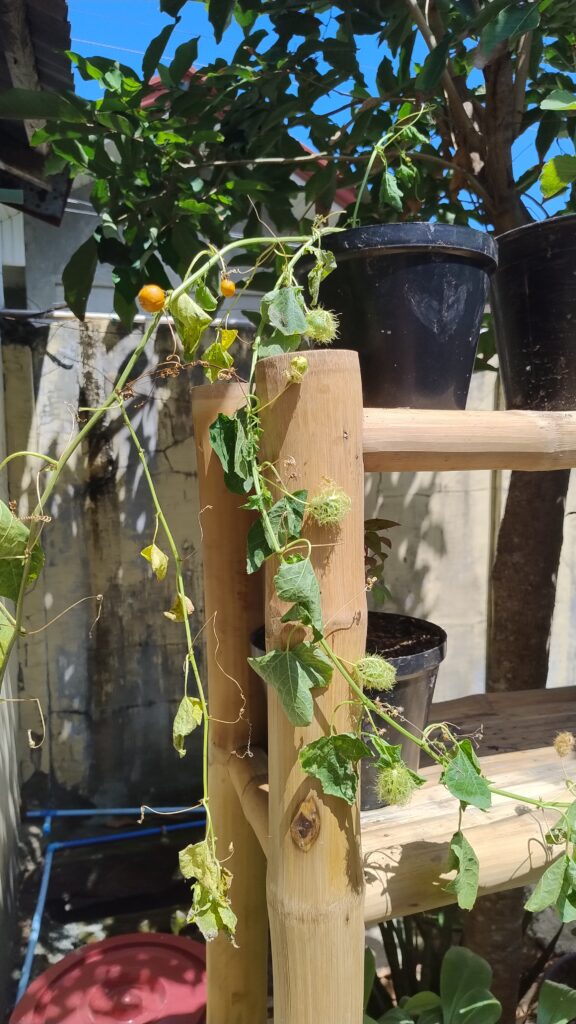
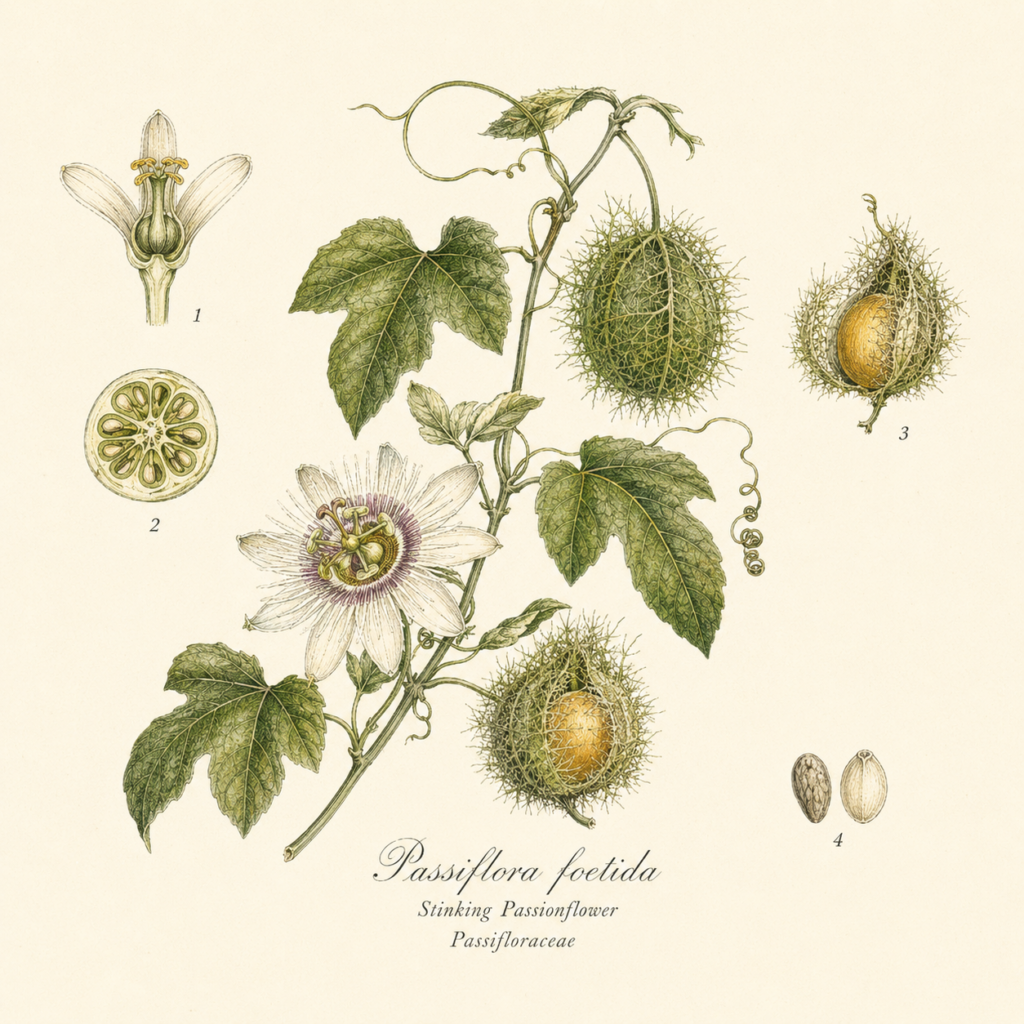
Stinking Passionflower is a fast-growing tropical climbing vine native to the Americas and now widespread throughout the tropics. It is easily recognized by its delicate white flowers and the remarkable green, lace-like bracts that surround each fruit like a small cage. Ripe fruits turn yellow to orange and contain a sweet edible pulp. The crushed leaves emit a distinctive odor, which gave the species its name foetida (“foul-smelling”). The vine commonly reaches 2–5 m in length.
Water:
Moderate. Prefers evenly moist soil but tolerates short dry periods once established. Avoid prolonged waterlogging.
Sunlight:
Full sun to partial shade. Best flowering and fruiting occur in sunny locations.
Propagation:
Usually propagated from seeds. Fresh seeds germinate readily in warm conditions. The vine may also root from stem cuttings, although success rates vary.
Usage:
– Children often eat the ripe orange fruits as a wild snack.
– The sweet pulp surrounding the seeds is edible.
– Grown as an ornamental vine because of its unusual hairy bracts and delicate flowers.– Provides shelter and food for various insects and pollinators.
– Commonly found along roadsides, riverbanks, fences, and disturbed ground throughout the tropics.
Acquired:
Collected as a wild plant along the riverbank, under the bridge connecting Batiano and Gapawan, Odiongan, Romblon in June 2026.
History:
– Discovered growing on a rocky riverbank near brackish water.
– Later identified as Passiflora foetida after examining the fruits and bracts.
– A cutting with fruits was collected and planted in a 6 liter Timba in June 2026.
Current status:
Recently transplanted from a cutting. Survival and rooting are currently being observed. It’s not clear if the plant will make it.
Notes:
Photos: